Friday, April 9, 2010

Most Terrifying Spiral Staircases on Earth

Glasgow

Most Terrifying Spiral Staircases on Earth


Glasgow lighthouse

Apart from the fact that they simply make you dizzy, spiral staircases are not for the faint of heart as this post will show. They are often in lofty places or the opposite, cramped dungeons, so mastering a spiral staircase is not a question of simply walking up or down. Claustrophobia, vertigo-inducing views and stomach-churning heights have to be braved because of those adventurous minds that installed spiral staircases in the scariest of places.

Long way down and low handrail at a tall pagoda in Singapore:
Singapore

Like a slightly heart-shaped vortex – don’t get sucked in:
ITC MIskolc

The square yet spiral staircase in an old apartment house in Hong Kong. Is that a trap door at the bottom?
Hong kong

Next, on to a treehouse: at 80 ft in height, the spiral staircase winding around a fir tree at Cedar Creek Treehouse, Mt. Rainier, is called “Stairway to Heaven”. The reason for this is that it leads to Cedar Creek Observatory, reachable via a 43 ft-long suspension bridge. We’re not sure what’s scarier – the climb up the tree, or the walk across the bridge.

Here’s a view from low down:
Cedar Creek 
staircase

… and from up top:
Cedar Creek STairway to 
Heaven

Almost there – the observatory:
Cedar Creek 
Observatory

The scary outside staircase below winds its way around the chimney of the old Bóbila Almirall in Terrassa, Catalonia. At 63 m, it is the world’s tallest chimney with a spiral staircase. In case you’re contemplating going up, it’s 234 steps to the top and there’s not much of a handrail to hold on to!

Old chimney in Terrassa, Spain:
Terrassa

Lighthouse stairs surely have their scary element, given their length and the claustrophobia factor

Looking up at the lighthouse in Brunate, Italy:
Brunate

Santa Barbara lighthouse with see-through staircase:
Santa Barbara lighthouse

And fire escapes and building staircases can be scary if the view down makes your stomach feel queasy. We’ve found a few that fit the description.

Inside the Julius Tower in Berlin Spandau:
Julius
 Tower

The image above was taken inside the 30 m tall Julius tower. It is part of the Spandau Citadel, one of Europe’s most important Renaissance forts, built between 1559 and 1594. Its famous wooden spiral staircase was reconstructed in 1964 after the neo-Gothic one of 1843.

Only in emergencies – old fire escape on a building in Boston:
Fire escape Boston

Those who like to go spelunking may want to tour California’s Moaning Cavern. Just be warned that this rickety looking staircase is part of the package…

Dark, rickety and claustrophobic:
Moaning Cavern

The Statue of Liberty in New York, though exhilarating to get to, rich in history and an important monument, is not for those with an aversion to cramped spaces and climbing tiny, dizzying steps in one direction.

Looking up at the steel construction:
Statue of 
liberty

This staircase used to take tourists up – no longer because of security reasons:
Statue of Liberty

Climbing up to the crown:
statue of liberty

Iraq’s Malwiya Tower
Malwiya Tower

Then, there are buildings that are only staircases – the spiral minaret, or Malwiya Tower, above at the Great Mosque of Samarra, 125 km (78 miles) north of Baghdad, is one of them. Commissioned and built in the 9th century, at 52 m high and 33 m wide at the base, it was for a long time the world’s largest mosque. Though the ramp spiraling up to the top is quite broad, there’s no protection on the sides; one step too far and it’s a free fall down.

Here’s an image with people, tiny in comparison:
Malwiya

Anyone who has been inside the Sagrada Familia, Gaudi’s monumental church in Barcelona, Spain, will agree that its long and winding stone staircases in each 170 m-tall spire are by far the building’s scariest features – about 20 stories tall without a handrail.

This is just the beginning…
Sagrada Familia

… or option 2, the elevator:
Sagrada Familia 
lift

…before you know it, you look down at something like this:
Sagrada Familia

Says photographer Travis Miller about how he took the shot above: “I was the only person in the towers this day and going down was quite the mental challenge to keep my mind focused on the task at hand…don’t know if I could handle it today … I was tottering quite badly.”

Sagrada Familia

World's Longest Under sea Tunnel

World's Longest Under sea Tunnel

The Seikan Tunnel is a 53.85 km (33.46 mi) railway tunnel in Japan, with a 23.3-kilometre (14.5 mi) long portion under the seabed. Track level is about 140-metre (460 ft) below seabed and 240-metre (790 ft) below sea level. It is the longest undersea tunnel in the world, although the Channel Tunnel between the United Kingdom and France has a longer under-sea portion. It travels beneath the Tsugaru Strait—connecting Aomori Prefecture on the Japanese island of Honsh? and the island of Hokkaid?—as part of the Kaikyo Line of Hokkaido Railway Company. Although it is the longest traffic (railway or road) tunnel in the world, faster and cheaper air travel has left the Seikan Tunnel comparatively underused. Its claim to the record for the longest tunnel will be taken when the Gotthard Base Tunnel, a European railway tunnel, is completed in around 2018. It is also the deepest rail tunnel in the world.
Surveying started in 1946 and in 1971, twenty-five years later, construction began. By August 1982, less than 700 metres of the tunnel remained to be excavated. First contact between the two sides was in 1983.

The Tsugaru Strait has eastern and western necks, both approximately 20 kilometres across. Initial surveys undertaken in 1946 indicated that the eastern neck was up to 200 metres deep with volcanic geology. The western neck had a maximum depth of 140 metres and geology consisting mostly of sedimentary rocks of the Neogene period. The western neck was selected, with its conditions considered favourable for tunnelling.

Geology of the undersea portion of the tunnel consists of volcanic rock, pyroclastic rock, and sedimentary rock of the late Tertiary era. The area is folded into a nearly vertical anticline, which means that the youngest rock is in the centre of the Strait, and encountered last. Divided roughly into thirds, the Honsh? side consists of volcanic rocks (andesite, basalt etc); the Hokkaid? side consists of sedimentary rocks (Tertiary period tuff, mudstone, etc); and the centre portion consists of Kuromatsunai strata (Tertiary period sand-like mudstone). Igneous intrusions and faults caused crushing of the rock and complicated the tunnelling procedures.

Initial geological investigation occurred from 1946–1963 which involved drilling the sea-bed, sonic surveys, submarine boring, observations using a mini-submarine, and seismic and magnetic surveys. To establish a greater understanding, a horizontal pilot boring was undertaken along the line of both the service and pilot tunnels

Tunnelling occurred simultaneously from both the northern and southern ends. The dry land portions were tackled with traditional mountain tunnelling techniques, with a single main tunnel. However, for the 23.3-kilometre undersea portion, three bores were excavated with increasing diameters respectively: an initial pilot tunnel, a service tunnel, and finally the main tunnel. The service tunnel was periodically connected to the main tunnel with a series of connecting shafts, at 600- to 1,000-metre intervals. The pilot tunnel serves as the service tunnel for the central five-kilometre portion.

Beneath the Tsugaru Strait, the use of a tunnel boring machine (TBM) was abandoned after less than two kilometres owing to the variable nature of the rock and difficulty in accessing the face for advanced grouting. Blasting with dynamite and mechanical picking were then used to excavate.

Thursday, April 8, 2010

Manchester's Deserted Victoria Baths.

Manchester's Deserted Victoria Baths.


Very often city bosses are quick to bulldoze deserted buildings that stand on prime locations.  But thankfully that is not the case with Manchester's spectacular Victoria Baths.  Closed since 1993, the incredibly intact interior and Edwardian-era styling make the baths a photographer' s dream.


The internal features are mirrored in their elegance by the Victoria Baths' outward design.  Built from red brick - used prominently in Manchester and across the north west of England - punctuated with terracotta decoration, Victoria Baths evokes the grandeur of Victorian/Edwardian architecture, seen in hotels, swimming baths, railway stations and other public buildings of the era.  At the time of construction in 1906, Manchester had one of the wealthiest municipal coffers in the world.


While many old swimming baths and other similar buildings still exist today, most have been gutted if their internal splendour and converted for other uses.  Pubs and bars are a common example, often making considerable effort to retain some of the ornate features - but most importantly saving the historic buildings for future generations.  The stained glass windows and spectacular green tiling is a defining feature of the Victoria Baths.


No expense was spared during the construction of Victoria Baths.  In addition to the tiling, fine woodwork and iron mongery produced by a skilled generation of master craftsmen graced the entrances and offices of the building.  Above can be seen an iron ballustrade topping sillouetted against the backdrop of the womens' pool.  There are three pools, including one for men and one for women.  The main pool was covered over in winter months and used as a dance hall.


Operating Victoria Baths - which also included a Turkish baths - required a large amount of below-ground machinary, piping and filtration systems.  Above can be seen that same system today, covered in more than a decade of dirt but otherwise still seemingly intact.


The elegant design continues into the pool areas themselves, with high stained glass windows, ornate changing facilities around the top balconies of the pools, and a fantastic fish mosaic swimming within the deep green tiling

The steam rooms of the Turkish baths mix deep turquoise tiling with the more prominent green accenting the walls throughout the building.  The designers went to great lengths to design grand features around seemingly mundane functions - such as the tap (above).  Victoria Baths has featured in the TV hit Life on Mars.  The instantly recognisable green-tiled staircase suggests it also served as the internals for the old Tomb Street Bath House, in the stylish yet ultra-violent film Resurrection Man, set in Belfast.


Above can be seen the long empty womens' pool, with the grand iron turnstyle at the entrance.  By comparison, the pool at the very top of this article is the first class gala/males pool, with spectators seating around the balcony.  One of many fundraising and arts events is in full swing, with bright images projected against the rear wall of the pool.  Thankfully the Friends of Victoria Baths have been campaigning the protect and restore the building since it closed in 1993.  And by the looks of it, they're doing a fantastic job, given how quickly empty buildings often go to rack and ruin.  Check out these open days to find out when you and your camera can explore the baths.

Burj Al Khalifa In Night

It looks really spectacular and splendid in night. Although it’s just another boring skyscraper…

Friday, March 5, 2010

Unique Building Construction technologies

Unique Structures to be built soon!

Construction technologies are advancing extremely quickly. Couple that with multi-billionnaires / deep-pocketed companies trying to outdo each other in the quest for the next standout design and you have a near-future filled with mile-high skyscrapers and buildings that no longer look like buildings.


Below are 9 strange and unique structures which have either been approved or are in the final stages of approval. some have already been partially constructed.
Welcome to the future landscape.
1. aqua, usa (website)


From a distance this skyscraper, to be completed in 2009 in chicago, will seem quite traditional. it’ll only be when you get close and look up that you can appreciate the ripple/jelly effect created by variously sized balconies from top to bottom.

2. residence antilia, india (architects’ website)


Construction has begun on residence antilia despite opposition from those who see it as an ‘excessive’ design in a city where more than 65% of the population live in slums. politics aside and after you recover from the initial shock of seeing a skyscraper that resembles an ikea cd rack, the building actually looks like it may succeed as a stunning, unique, green piece of architecture.
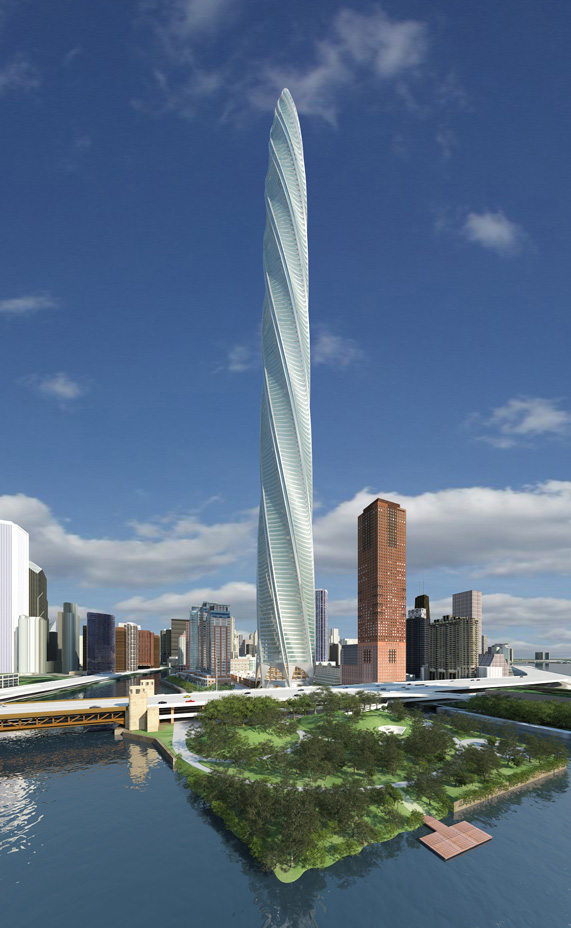
3. chicago spire, usa (website)


The phenomenal chicago spire, when completed in 2010, will be the world’s tallest residential building and the tallest building of any kind in the western world. seemingly modelled on the image of a giant drill poking through the ground, the 609m structure will dominate the chicago skyline.

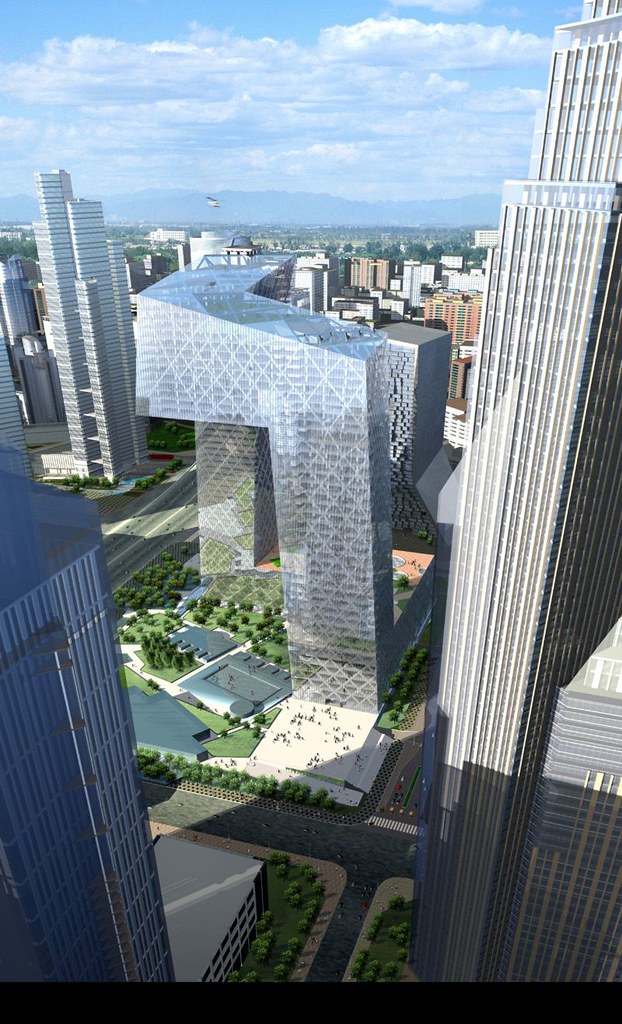
4. cctv headquarters, china (website)

At a modest 234m the cctv building isn’t going to stand out from a distance. however the design and shape is a crowdstopper to say the least and will be another incredible addition to beijing’s skyline in time for the 2008 olympics. the shape, described as a ‘z criss-cross’ results in a very high, seemingly unsupported corner at the front. let’s hope there’s a glass floor up there.

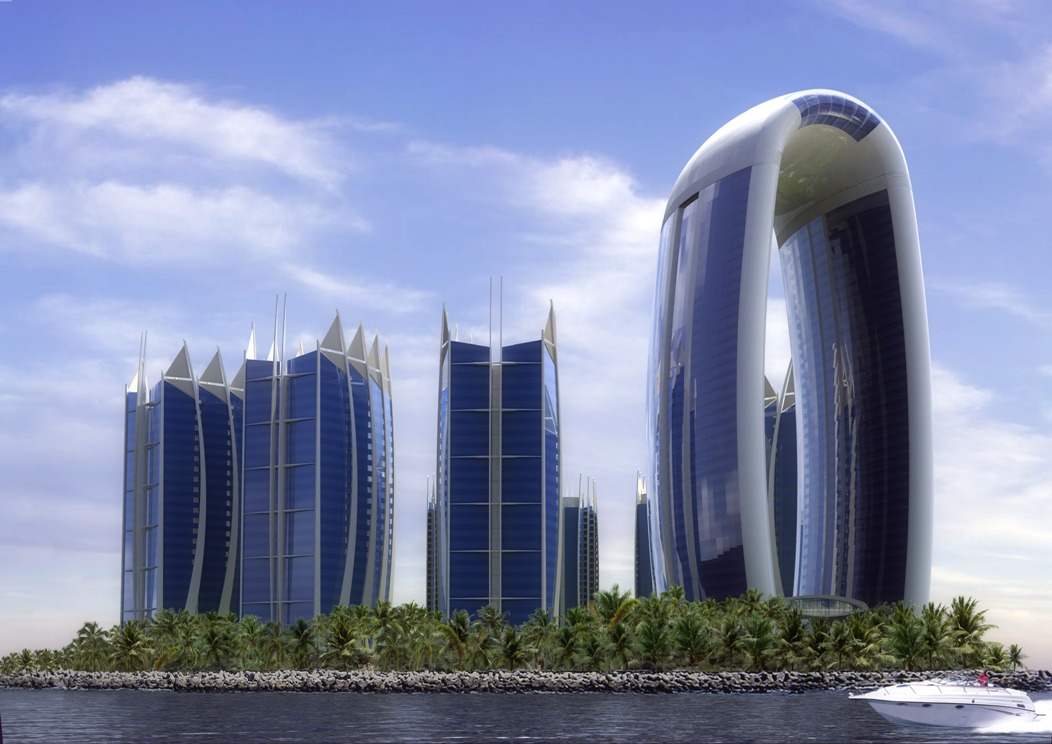
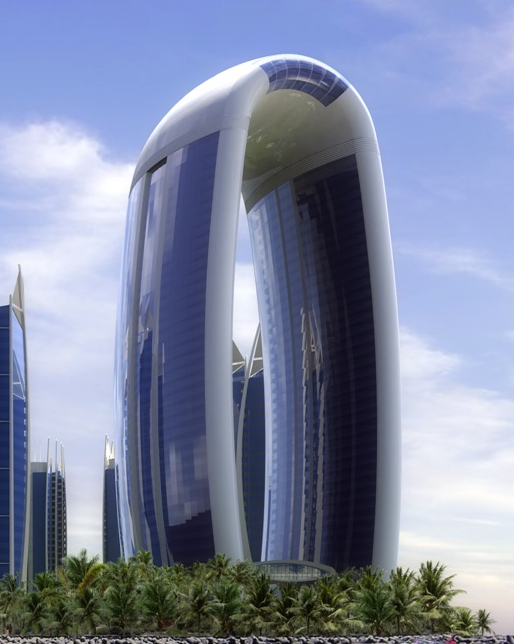
5. regatta hotel, jakarta (website)


Taking on a nautical theme, the developers say the 10 smaller towers represent sailing boats whilst the larger building is ‘the lighthouse’. it’s the lighthouse that steals the show for me, possibly the most incredible looking structure i’ve seen for a long time. if it ends up looking anything close to these pictures i’ll be impressed.

6. russia tower, russia (architects’ website)

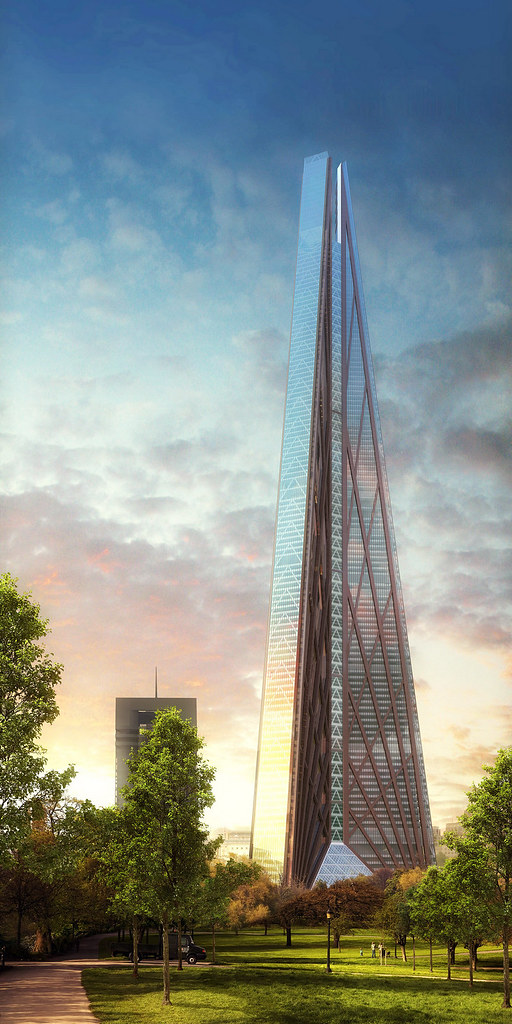
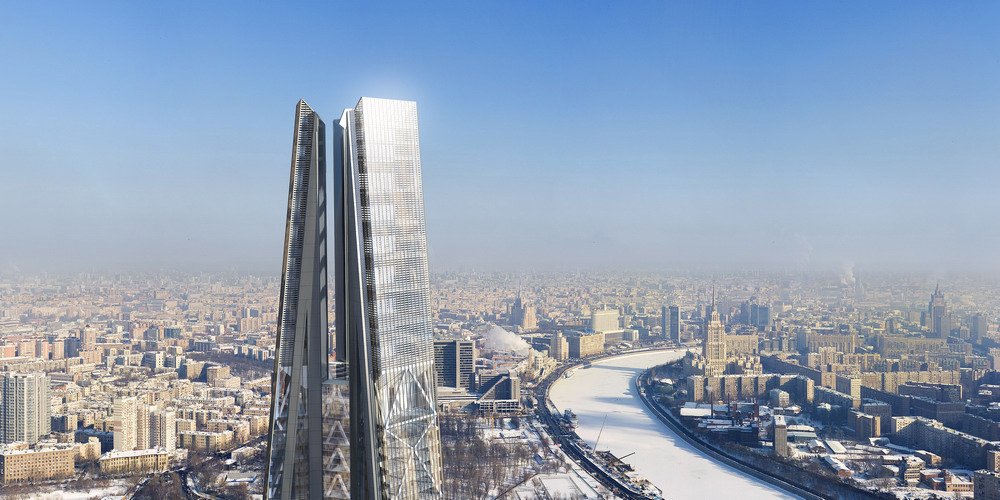
Topped with an observation deck over the city of moscow, russia tower will become the tallest building in europe when completed in 2012 and twice the height of the eiffel tower. construction has already started on this angular beast which was designed by foster & partners, also responsible for the gherkin and spaceport america, currently in development.


7. penang global city centre, malaysia (website)

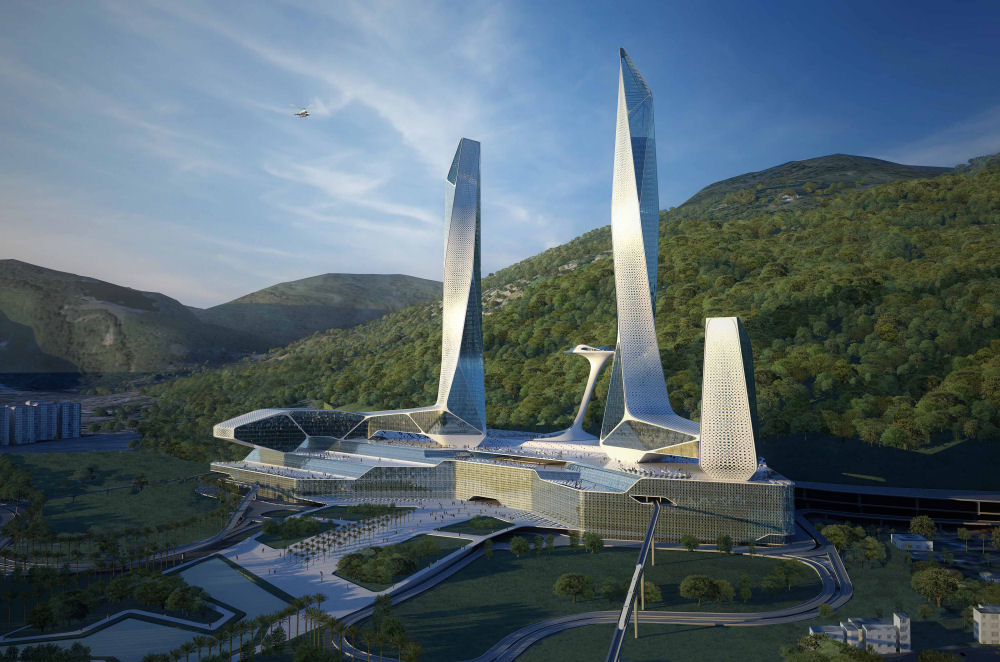
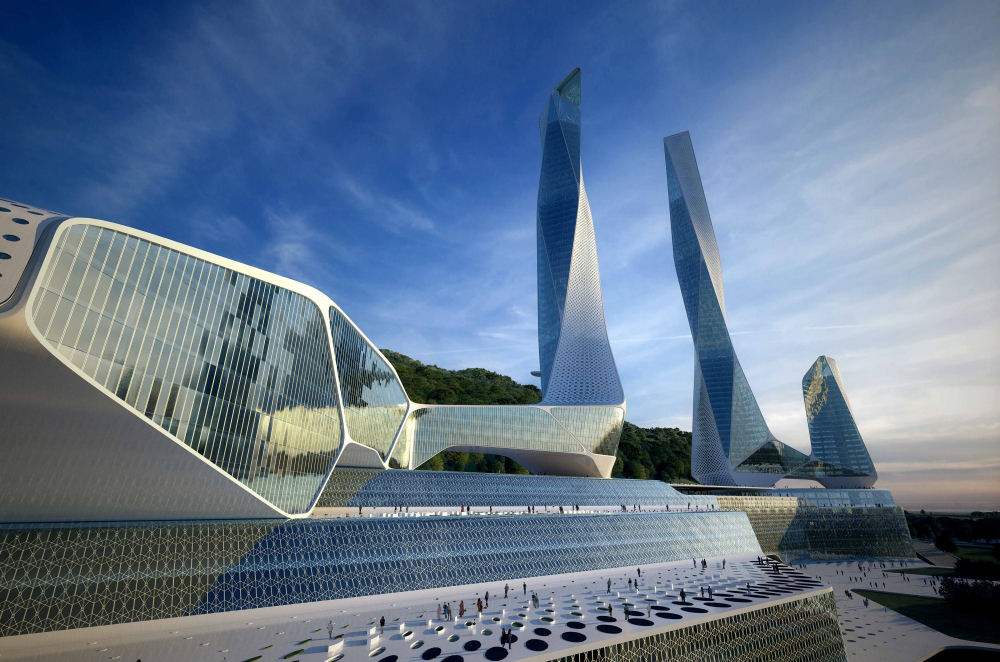
Following months of speculation and sturdy opposition, this humungous project is in the final stages of approval and apparently construction will start very soon. even so, due to the size of the plan it will take at least 15 years to complete. resembling a sci-fi city, the area will be crowned by 2 x 200m towers and completely transform the small island of penang.

8. gazprom headquarters, russia (architects’ website)

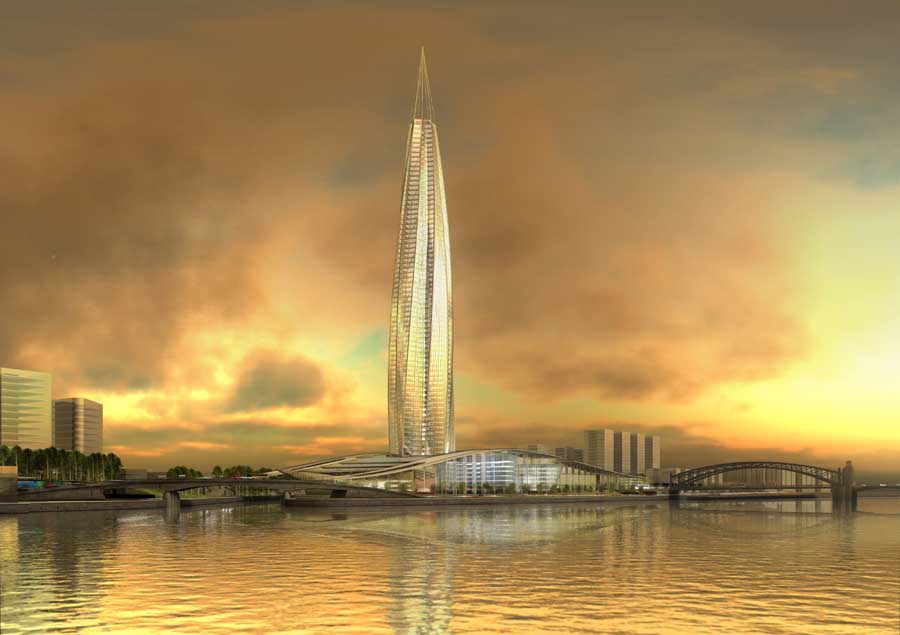
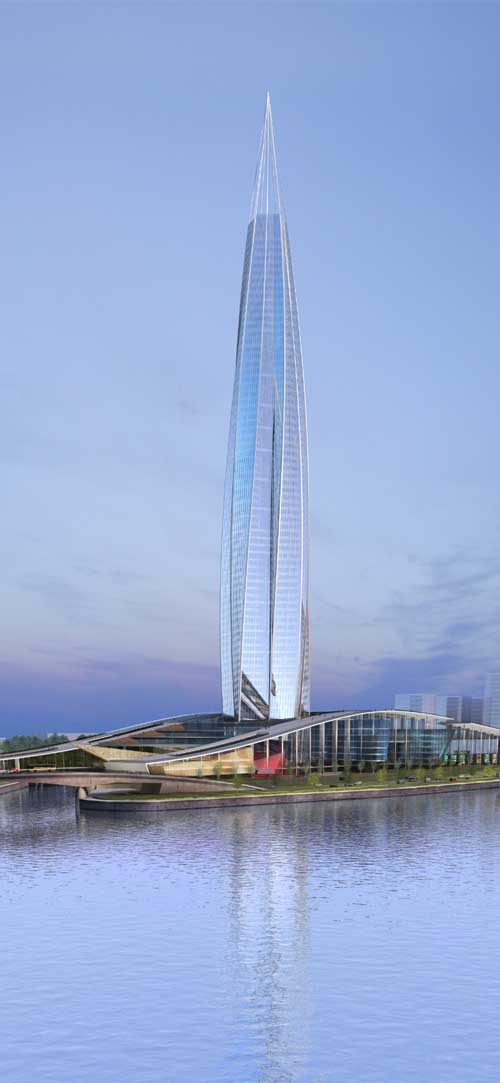
This gigantic, 300m tall glass flame of a building will house the gazprom headquarters in st. petersburg, dwarfing all structures in its vicinity. it will apparently change colour up to 10 times per day depending on the position of the sun. the building has already been nicknamed ‘corn on the cob’ by unhappy locals.

9. burj dubai, dubai (website)

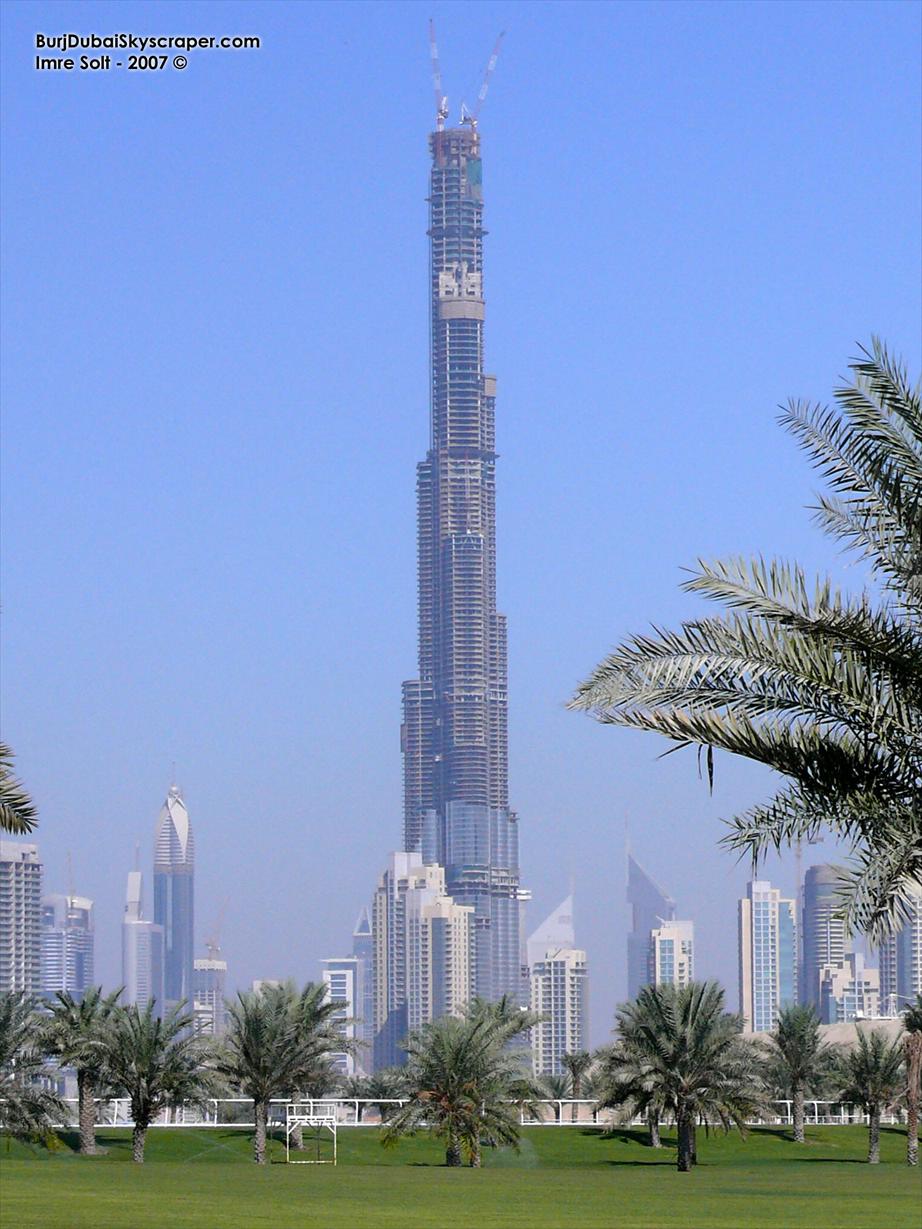
This is the big one. when completed next year it will be the tallest man-made structure in the world and the tallest building by a long shot with a predicted height of 818m. note: currently the tallest building on earth, excluding an antenna, is taipei 101 in taiwan which stands at 509m. the photo below is the building’s current state: the skyscrapers below the burj dubai used to look tall.